Skincare ASMR: Relaxing Games
- 4.8
- Rating
- 10.00M
- Installs
- Free
- Price

 Analysis by App-foxy
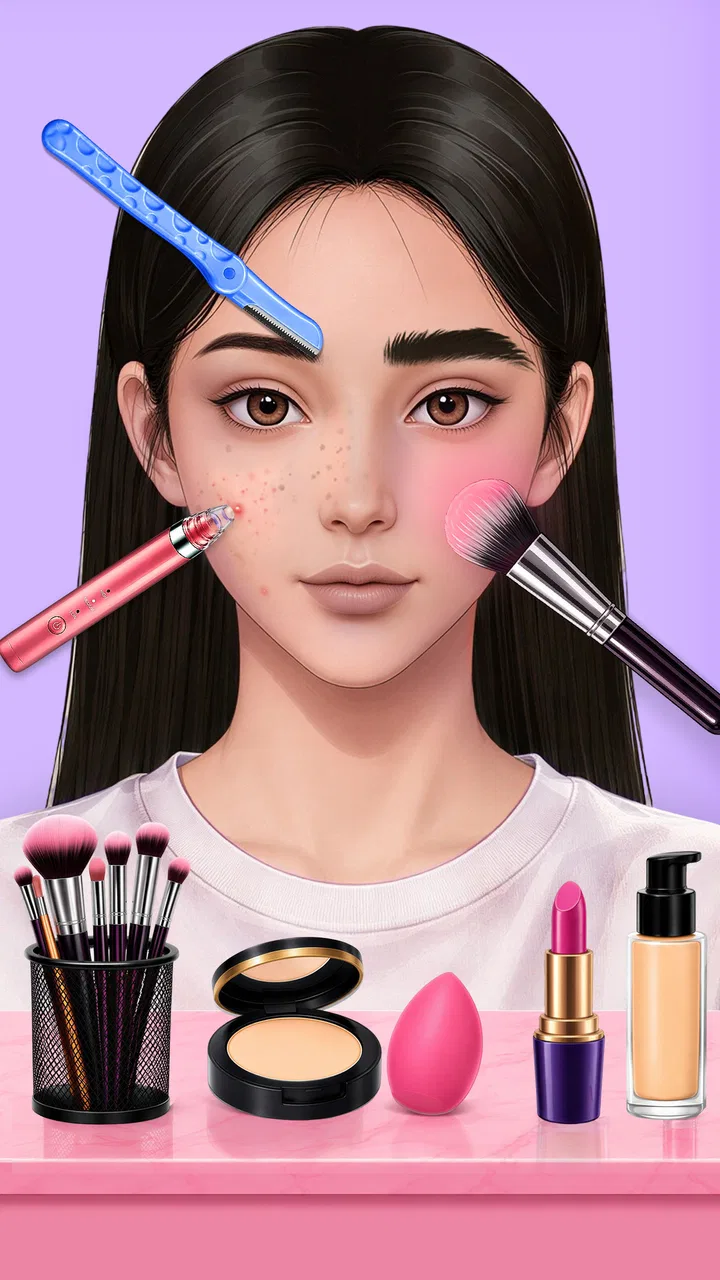
I went into Skincare ASMR: Relaxing Games expecting a small, low-pressure salon simulation, and that is exactly where it works best. It is a free simulation game from Mini Play built around skincare routines, makeup, and makeover moments rather than competition or complicated progression. The appeal is immediate: choose a client, work through a beauty treatment, and enjoy the visual satisfaction of turning an untidy starting point into a polished result.
That simple idea gives the game a clear identity. It is not trying to be a full beauty-management simulator, a story-heavy role-playing game, or a demanding puzzle title. Instead, it focuses on short, soothing interactions that are easy to understand when I only have a few spare minutes. The Everyone age rating also makes its presentation broadly approachable, although younger players may still need guidance around optional purchases.
After spending time with it, my opinion is positive but specific. I would recommend it to someone who likes gentle makeover games and wants a calming activity on a phone. I would not choose it for deep strategy, realistic cosmetics education, or a long-term challenge. Its best quality is the way its visual theme, salon setting, and unhurried rhythm support one another.
You May Also Like

 Blood Strike: 2.5 Anniversary
Blood Strike’s Loadouts Turn Every Drop Into a Tactical Gamble
A close look at Blood Strike’s custom loadouts: how fast access to signature weapons reshapes its battle royale rhythm, rewards preparation, and narrows the gap between fights.

 Pandora - Music & Podcasts
Pandora’s Music Is Easy to Start, but Harder to Recover
Pandora’s strength is its low-effort path from a seed to a station. Its weak spot is how much confidence it asks you to place in connection, setup, and quiet recovery.

 8 Ball Pool
 Is Built on Rivalries, Rematches, and Routine
A close look at the rivalries, rematches, shared routines, and unanswered safety questions that turn a quick pool match into a persistent mobile community.

 Samsung Music
’s Quiet Strength Is Playing What You Already Own
Its reach comes less from spectacle than from dependable access to a personal library. That simplicity is both the app’s strongest retention engine and its ceiling.

 AccuWeather: Weather Radar
AccuWeather Review: A Quick, Clear Forecast for Everyday Decisions
For everyday plans, the best forecast is the one you can understand quickly. AccuWeather makes rain timing, radar, and local conditions easy to act on, with a few trade-offs.

 Hill Climb Racing
Why Hill Climb Racing Still Turns Crashes Into One More Run
A tiny car, a bumpy hill and one more upgrade: Hill Climb Racing keeps resurfacing because its simple chaos makes every near-miss feel personal.
More From Our News Desk



A salon game that understands its own scale
The first impression is deliberately uncomplicated. The game puts the focus on the client and the treatment in front of me instead of burying the experience under menus, complicated tutorials, or a large amount of reading. That makes it welcoming for casual players who want to begin quickly. The central loop is easy to recognize: perform beauty-care actions, improve the appearance on screen, and move toward a finished makeover.
This straightforward structure is important because the game’s pleasure comes from completion. Each small action feels like part of a visible before-and-after process. I can see why the format suits touchscreens: the subject is already centered, the tasks are visually readable, and the interaction feels more like handling objects in a miniature salon than controlling a traditional game character.
The presentation also avoids making the player feel rushed. There is no need to learn a complicated control scheme before the relaxing side becomes apparent. For a quick evening session, that is a genuine strength. I can open the game, complete a treatment, and leave without feeling that I have abandoned a large mission or lost important progress.
At the same time, the modest scope sets expectations. If I approach it hoping for a detailed salon business with staff management, inventory decisions, customer personalities, or extensive customization, I am likely to find the experience too light. The game is better understood as a sequence of satisfying beauty activities than as a complete professional simulation.
Who gets the most from the format
The strongest audience is anyone who enjoys makeover games but prefers calm repetition over pressure. It can work well as a short break between tasks, a quiet wind-down before bed, or a simple game for players who do not normally spend time with action titles. The controls and objectives are approachable enough that a newcomer does not need prior experience with simulation games.
It is also a reasonable choice for players who enjoy visual cleanup and transformation. The satisfaction is not based on winning against another player; it comes from seeing a face and overall look become more cared for through a series of treatments. That gives the game a gentle sense of progress even when the underlying actions remain simple.
I would be more cautious recommending it to someone who needs constant novelty. Repeating familiar salon actions can be soothing for one player and dull for another. Likewise, a user looking for realistic skincare guidance should treat the game as entertainment, not as a substitute for advice from a qualified professional. The beauty language is part of the fantasy and the mood, not a lesson in dermatology.
How the visual world carries the theme
The art direction communicates the game’s purpose without needing an elaborate fictional universe. The salon setting gives every interaction a reason to exist: skincare, makeup, and makeover actions feel connected because they belong to the same beauty-care environment. That coherence matters more here than a large map or a detailed narrative.
I like that the setting keeps attention on the treatment. In many casual games, decorative elements compete with the actual task, but this kind of salon design works best when the client remains the visual anchor. The player is encouraged to notice changes in appearance, which makes even a small action feel meaningful.
The world also uses a familiar fantasy of personal care. A salon is easy to understand, so the game can establish its mood quickly. I do not need a long explanation of the setting before I understand what I am meant to do. That accessibility is one reason the title feels suitable for short sessions and a wide age range.
There is a trade-off, though. A focused setting can begin to feel narrow if I play for long stretches without a change in activity or presentation. The same calm salon language that makes the opening comfortable can reduce the sense of discovery later. In my experience, the game is more enjoyable when I treat it as a relaxing collection of sessions rather than a world I am expected to explore for hours at a time.
The small details that make the makeover loop work
One useful way to play is to slow down and read each action as a stage in a routine instead of tapping as quickly as possible. The game’s satisfaction comes from sequence: care first, cosmetic refinement afterward, and a finished look at the end. Rushing through every prompt can turn the experience into a checklist, while taking a moment to watch each change makes the visual payoff more noticeable.
Another practical tip is to use it when I want a low-commitment activity rather than when I am searching for a major gaming session. The game’s scale is an advantage in that situation. I can use a short break to complete one makeover without needing to remember a complicated plot or rebuild a strategy from a previous session.
The makeover format also makes it suitable for sharing a device with a family member who enjoys beauty themes. Since the age rating is Everyone, the overall presentation is designed to be broadly accessible. Still, I would keep an eye on purchase prompts if a child is playing, because the game includes optional in-app items priced at $1.99 each.
Why the sound and pacing matter
The “ASMR” identity is not just a label attached to a salon game. It sets an expectation about how the game should feel: quiet, tactile, and focused on small satisfying moments. The visual actions and the salon context are arranged to support that expectation rather than pushing the player toward urgency.
What I appreciate most is the absence of a need to hurry. A relaxing game loses much of its purpose when every action is measured against a harsh timer or a punishing failure state. Here, the appeal is in observing the treatment unfold and enjoying the steady movement toward a result. The pacing gives the game room to function as a mental reset.
This rhythm is especially useful after a busy day. For example, if I have a few minutes while waiting for dinner or taking a break from work, I can play a short salon sequence without the emotional demand of a competitive match. The activity occupies my attention, but it does not ask me to defend a score, react to opponents, or solve a difficult problem under pressure.
That same calmness can become a limitation for players who use games primarily for excitement. The game does not appear designed to create tension through fast reflexes or difficult decisions. Its pleasure depends on whether the player enjoys repetition, visual progress, and a soft pace. If those qualities sound boring rather than comforting, the ASMR approach will probably not change your mind.
A better rhythm for short sessions
I found that the game works best when I resist the urge to treat every available action as something to complete immediately. Watching the transition between stages helps preserve the mood. It is a small distinction, but it separates a relaxing session from mindless tapping.
I also recommend playing with the expectation of a contained experience. Instead of asking how much content I can finish in one sitting, I ask whether the current treatment gives me a pleasant few minutes. That change in mindset fits the design better and prevents the limited intensity from feeling like a weakness.
The sound-and-touch concept is also why the game compares differently with ordinary makeover alternatives. A more competitive beauty game may offer stronger goals, rankings, or collection systems, while a fashion-focused title may emphasize outfit selection. This game places more weight on the feeling of carrying out care steps. It is the better choice when I want the process itself to be soothing, not merely the final appearance.
Where the calming design may frustrate
The relaxed pace does not automatically make every interaction satisfying. Some players may want more control over the final look or more meaningful choices between treatments. If the game presents actions mainly as a guided sequence, the player’s role can feel closer to following instructions than designing a personal salon style.
That is the central trade-off: accessibility and calmness are gained by keeping the experience easy to read, but depth may be reduced. I would not describe this as a flaw for its intended audience. It becomes a problem only when I expect the game to reward experimentation, planning, or mastery in the way a deeper simulation would.
Mechanics beneath the relaxing surface
Although the atmosphere is the main selling point, the mechanics still need to support it. The game succeeds when the actions feel connected to the visible improvement on the client. A treatment should not feel like an unrelated mini-game placed inside a salon; it should feel like one step in a recognizable beauty routine.
The simulation category is therefore best interpreted in a light, casual sense. I am simulating the experience of providing skincare and makeup care, but I am not managing a complex business or making high-stakes professional decisions. The game gives me the fantasy of running through a salon makeover without the paperwork, resource pressure, or scheduling that would define a heavier management title.
This makes the game easy to recommend to people who find traditional simulations intimidating. There is no need to study a large rule set before enjoying the main loop. The trade-off is that experienced simulation fans may want more systems layered around the treatments. Players who enjoy optimizing budgets, balancing customer needs, or expanding a virtual business should look toward a more management-focused alternative.
The most interesting mechanical strength is the connection between action and feedback. When a treatment produces a visible change, the player receives an immediate reason to continue. That is a simple design principle, but it is particularly effective in a makeover game because the result can be seen rather than calculated.
Free access and optional spending
The game is free to download, which makes it easy to try without committing money at the start. That matters for this type of casual title because the right question is personal: do I enjoy the rhythm enough to return? I can answer that through play rather than relying on a purchase decision made in advance.
Optional in-app items cost $1.99 each. I would approach those purchases carefully and decide whether they improve my experience or simply shorten the time between activities. For a relaxing game, paying to move faster can sometimes work against the reason I opened it. The more sensible approach is to enjoy the available routine first and only consider spending if an optional item genuinely adds something I value.
Parents should also remember that “free” does not mean completely separate from spending. Because the game is rated Everyone, it may attract younger players, so device-level purchase controls are worth using when appropriate. That is practical advice for any family-shared phone or tablet, but it is especially relevant when a game presents optional items inside an otherwise accessible experience.
Device expectations and the current build
The current version is 1.1.0, and the game supports devices running Android 7.1 or later. That gives it a fairly broad technical reach for people using older compatible Android hardware. Before installing, I would still check that the device has enough free space and that the operating system meets the requirement, particularly on an older phone.
Mini Play has chosen a concept that does not need a complicated control setup. That helps the game feel natural on a touchscreen and makes it less dependent on specialized hardware. I would choose it on a phone when I want convenience, while a larger screen may make the visual changes easier to appreciate during longer sessions.
Its popularity suggests that the format has found a substantial casual audience: the game has passed ten million installs and holds a 4.8 average from around eighty thousand ratings. Those figures do not replace personal testing, but they do indicate that the basic idea resonates with many players. The smaller review total, around two hundred forty, is a reminder that ratings and written opinions are not the same kind of signal, so I would still judge the game by whether its calm loop matches my taste.
How it compares with the usual alternatives
Compared with a fashion-dressing game, this title is more interested in the preparation and care behind a finished look. If I want to choose outfits, coordinate colors, or build a wardrobe, a fashion alternative may offer more variety. If I want the satisfaction of cleaning up, treating, and refining a client in a salon setting, this game has the clearer focus.
Compared with a serious salon-management simulation, it is much easier to start and much less demanding to maintain. I do not approach it as a business optimization exercise. That makes it friendlier for casual play but less rewarding for anyone who wants long-term planning and consequences.
Compared with a puzzle game, the challenge is softer and the feedback is more visual than logical. There is less pressure to find a perfect solution and more emphasis on completing a sequence. I would choose this game when I want to decompress, and a puzzle alternative when I want my mind challenged.
That comparison also clarifies who should skip it. Players seeking competitive goals, deep customization, realistic skincare instruction, or a story with substantial character development will probably be better served elsewhere. The game’s strengths are real, but they come from restraint rather than abundance.
My atmosphere verdict after living with the routine
What stays with me is the consistency between the setting, the art direction, the sound-oriented identity, and the pace. The salon theme explains the actions, the makeover structure supplies visible progress, and the unhurried rhythm keeps the experience gentle. None of these parts seems to be fighting for attention, which is why the game can feel more coherent than its simple mechanics might suggest.
I would recommend it to a friend who wants a free, approachable skincare and makeup simulation for short relaxing sessions. I would describe it honestly as a mood-first game: the atmosphere is the reason to play, while the mechanics provide a pleasant framework for that mood. The best use case is a quick break when I want something interactive but do not want stress.
I would also tell that friend not to expect an endlessly deep salon career. Repetition is part of the design, and the optional purchases mean it is sensible to play patiently rather than assume every extra item is necessary. The game is most enjoyable when I let the routine be the reward instead of demanding constant escalation.
Mini Play’s release from Apr 18, 2025, gives the title a relatively recent place in the casual simulation space, but its appeal is timelessly simple: care for a client, watch the look improve, and enjoy a few quiet minutes. With its Everyone rating, free entry point, and Android 7.1 minimum requirement, it is easy for many players to try.
My final judgment is that Skincare ASMR: Relaxing Games is worth downloading if you understand its purpose. It is not a demanding simulator, and it will not satisfy every player who wants depth or variety. But when I want a calm salon makeover experience with clear visual feedback and a soft rhythm, it delivers a focused, pleasant session. Its real strength is the fit between what it looks like, how it sounds, and how it asks me to play.
FAQs for Skincare ASMR: Relaxing Games
01What is Skincare ASMR: Relaxing Games about?
Skincare ASMR: Relaxing Games is an immersive app designed to provide users with a calming experience through skincare-themed ASMR activities. The app features various mini-games centered around skincare routines, offering soothing sounds and visuals to help users unwind and relieve stress.
02Is Skincare ASMR: Relaxing Games free to download and play?
The app is free to download and offers a selection of features at no cost. However, it may include in-app purchases or ads that provide additional content or enhance the user experience. Users can choose to make these purchases to access premium features if desired.
03What devices are compatible with Skincare ASMR: Relaxing Games?
Skincare ASMR: Relaxing Games is available on both Android and iOS platforms. It runs smoothly on most modern smartphones and tablets. Users should ensure their devices meet the minimum operating system requirements to enjoy optimal performance and features.
04Does Skincare ASMR: Relaxing Games require an internet connection?
While some features of Skincare ASMR: Relaxing Games can be accessed offline, an internet connection may be necessary for updates, downloading additional content, or making in-app purchases. To have the best experience, an occasional online connection is recommended.
05Are there any parental controls in Skincare ASMR: Relaxing Games?
The app is generally suitable for all ages, but it may include advertisements or optional in-app purchases. Parents are encouraged to monitor these aspects and can use device settings to restrict purchases if necessary, ensuring a safe and controlled environment for younger users.
Pros
- Immersive ASMR experience
- Variety of skincare tools
- Calming sound effects
- User-friendly interface
- Free to download
Cons
- Contains in-app purchases
- Limited offline features
- Ads can be intrusive
- Requires frequent updates
- May not suit all audiences

Skincare ASMR: Relaxing Games
Gallery